
V "Health Seminar" held by GS1 Portugal
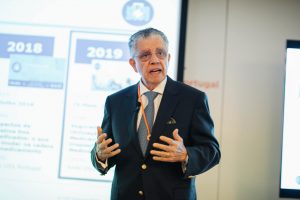
GS1 Portugal held the fifth edition of its Healthcare Seminar today. The event served as a meeting point and forum for the main operators in the sector’s value chain —regulators, hospitals, laboratories, and logistics providers—with the goal of addressing the main challenges associated with the impact of the Falsified Medicines Directive and the Medical Devices Directive, as well as more effective management in the healthcare context and patient safety.
Lisbon, May 29, 2019 - GS1 Portugal – Codipor held the fifth edition of the “Health Seminar” today. The event brought together key players in the healthcare sector, with the primary goal of raising awareness within the sector about the benefits of implementing Standards that ensure safety throughout the value chain and, consequently, patient safety, and to discuss legislative challenges, the industry’s adaptation to new requirements, and technological advancements.
In light of the questions regarding the timing The implementation of the Falsified Medicines and Medical Devices Directives is at odds with the need to ensure a proactive process that effectively addresses current concerns about the reality of counterfeiting and the growing sophistication surrounding it: “The system is only secure until the day it ceases to be so.”
International data from GS1 indicate that approximately 60% of medications purchased online are counterfeit, fake, or non-compliant, while 15% of the total market will consist of counterfeit drugs.
João de Castro Guimarães, Executive Director of GS1 Portugal, highlights the importance of this type of event, stating that the purpose is “that Companies, whether SMEs or larger firms, continue to view GS1 as a partner they can trust. The fifth edition of this seminar features outstanding speakers, and this is the greatest proof of the success of the work we have been carrying out in collaboration with companies, organizations, various entities, and public officials.”.
At the initiative’s opening session, the official emphasized that the healthcare sector has been and will continue to be one of the priorities of GS1 Portugal’s activities, with a focus on two key segments of the sector: pharmaceuticals and medical devices.
The event continued with remarks by Ricardo Valente, General Manager of MVO Portugal, who provided an overview of the introduction of the Falsified Medicines Directive and described the status of implementation of the national medicine verification system. In effect since February 9, 2019, the implementation is proceeding as expected, with approximately 88 million packages already uploaded to the national repository.
Immediately afterward, Teresa Carvalho, Technical Director of Menarini Portugal, presented the laboratories’ perspective. Among the challenges highlighted were the need to make changes to equipment, production sites, and manufacturing methods; the optimization of processes; and navigating bureaucratic validation procedures—all to ensure the inclusion on packaging of the unique identifier and the anti-tampering device now required.
Next, Hugo Barbosa, Technical Director at Rangel Pharma, presented the perspective of logistics operators, addressing the specific obligations of wholesalers and the challenges identified in implementing the Directive, which are linked to operational constraints and increased costs. Faced with a reality of distinct interface and business models, uncertainties regarding which entities will be covered, and varying levels of customer readiness, possible solutions include the option of aggregation supported by the repository system, an assessment of the need for a registration number, and the establishment of a transition period.
Hospitals were represented by Sérgio Quinteiro, Director of Logistics and Operational Support at Luz Saúde, who noted that compliance with the Directive in this context presented initial challenges, such as the short timeframe for its implementation and the lack of a clear role for hospitals. The group’s concern centered on developing measures to address the expected impact of adopting the Directive in a hospital setting, including increased demands on staff, a more complex and time-consuming logistics process, and potential network constraints and issues connecting to national and European databases.
The aforementioned presentations were followed by a brief discussion moderated by APIFARMA, GS1 Portugal, and APDH, respectively.
The afternoon program began with a presentation by Géraldine Lissalde-Bonnet, Director of Public Policy of GS1 Healthcare. The head of the GS1 Global Office provided context on the Medical Devices Directive and the role of the UDI—Unique Device Identification. The GS1 System will ensure enhanced levels of patient safety and harmonized identification for medical devices globally, through a process that enables the effective management—including identification, sharing, and capture—of product information.
This was followed by a panel discussion on the UDI, moderated by Madalena Centeno, Health Manager at GS1 Portugal. The panel consisted of Judite Neves, Director of Medical Devices and Health Products at INFARMED; Santiago Ruiz, General Manager of B. BRAUN; Antonieta Lucas, Vice President of APORMED; and Catarina Simões, Director Regulatory Affairs & Quality MEDTRONIC's operations in Portugal, Spain, and Italy.
Given the unknowns and uncertainties that still surround the implementation of the Directives, as well as their complexity, concerns are arising regarding the costs to businesses, the public sector, and, ultimately, every citizen, in a critical discussion—yet to take place—regarding the balance between the costs and the perceived benefits of this project.
Although industry stakeholders are generally aware of the need to register their devices, the details of how to do so are still being discussed. It is therefore necessary for the stakeholders Please stay informed and follow this issue closely.
To conclude the 5th Edition of the Health Seminar, the event featured a presentation by Maria de Belém Roseira in a “In Conversation with…” format moderated by journalist Fernanda Freitas. The message conveyed highlighted the lack of understanding regarding the need to constantly evolve. In a country suffering from the brain drain of health and engineering professionals, there is underutilized talent, particularly when applied to a sector as crucial for creating added value as healthcare. What is needed is greater focus on strategic investment and the ability to look further ahead, along with flexibility and adaptability tailored to the sector’s reality and the needs of citizens.
The Health Seminar is an annual event organized by GS1 Portugal and is intended to serve as a meeting place and hub for Stakeholders various initiatives, reinforcing the association's role as a neutral platform that facilitates coordinated action within the sector.
About GS1 Portugal:
GS1 Portugal is the organization responsible for introducing barcodes in Portugal more than 30 years ago. It is a neutral, nonprofit, private-law, multisectoral association that has been designated a public-interest entity. More than 8,000 companies have joined and believe in the GS1 Standards System to transform the way we work and live. We are one of the 112 member organizations of GS1 and the authorized entity to manage the GS1 System of Standards Global Companies in Portugal.