

- Consumption remains higher this year New Normal
- Promotional pressure grows again
- Baskets are now more varied and competitive and the choice of channels is more focused
- Looking for moments to socialize "indoors"
- Consumers more ready to adopt changes in the face of a new crisis
- Growing penetration of Online
Lisbon, July 2020 - At a time of market transformation, Nielsen has developed "COVIDisruption: The new consumer path", a report assessing how the COVID-19 pandemic has impacted FMCG consumption in Portugal and defining new trends in the relationship between brands, retailers and consumers. The analysis integrated the four phases of the impact of COVID-19 on FMCG consumption: Pre-COVID (weeks 1 to 8), Storage (weeks 9 to 11), Quarantine (weeks 12 to 18) and New Normal (weeks 19 to 20).
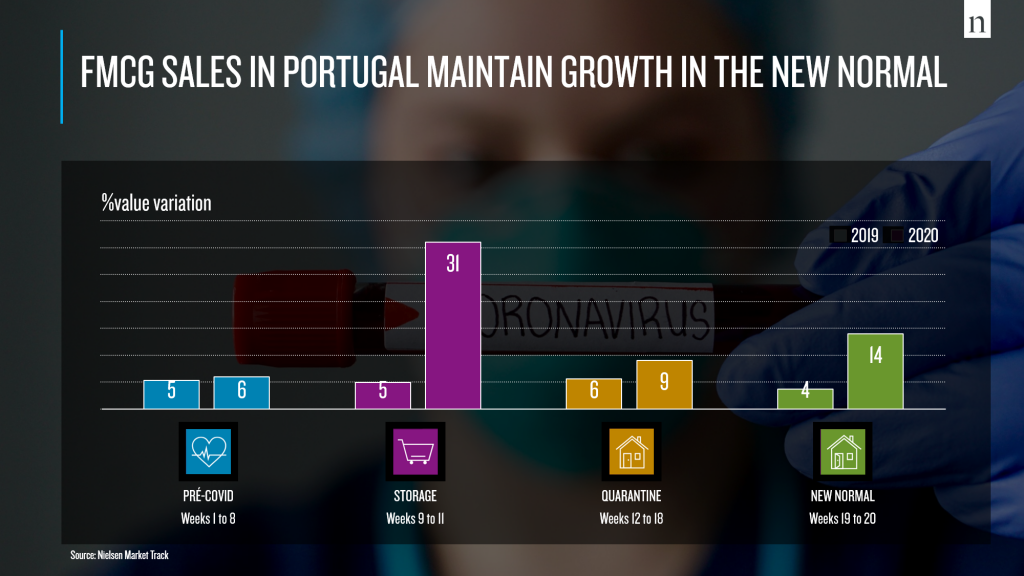
After a boost notable in the growth of FMCG sales during the StorageThese slowed down significantly in Quarantinebut remain more dynamic than in the same period of the previous year. New Normal. Although this year was already positive when compared to 2019, the reality of COVID-19 has accentuated this dynamic.
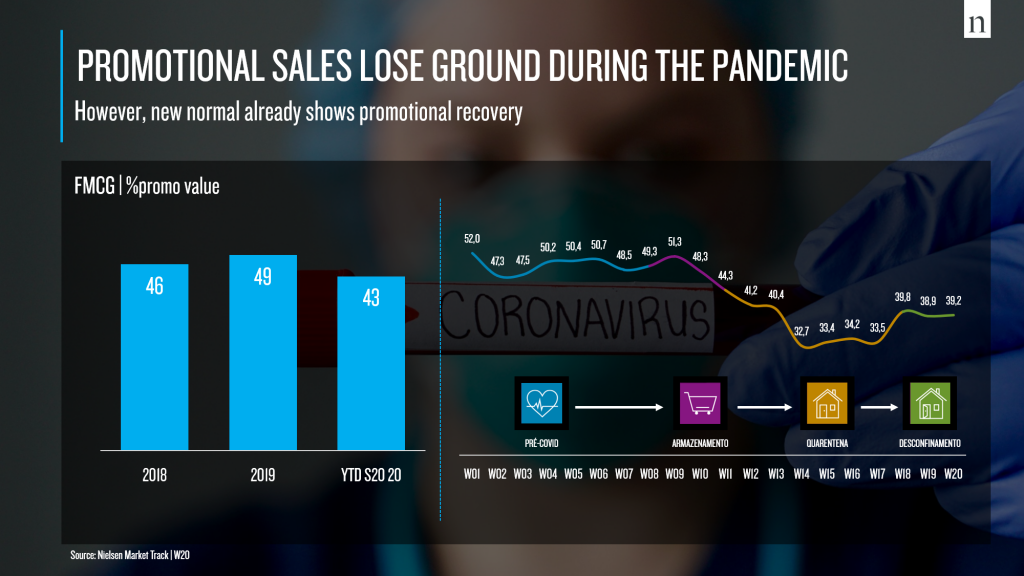
Sales during the period of greatest impact from COVID-19 were much less based on promotional pressure, which had been growing in recent times and totaled almost 50% of all the value generated in FMCG at the end of last year.
Redesigned baskets and differentiated channels
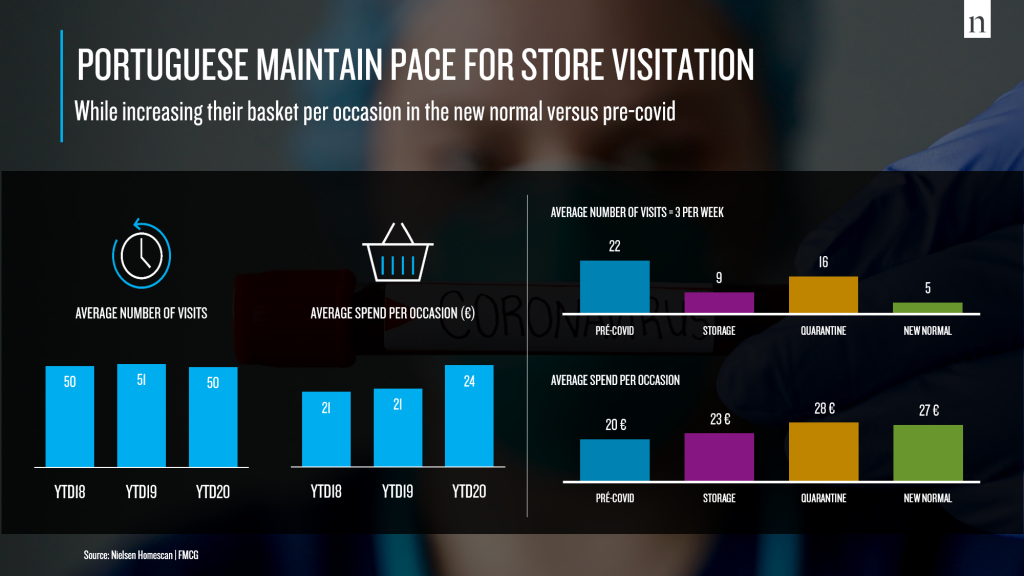
If during the Quarantine the tendency was to buy more items and in greater quantity, in this new reality consumers seem to want to continue to be less present in store, compensating for this lower number of acts of purchase with fuller baskets (over 30 items) and an increase in their value compared to the period Pre-COVID.
The choice of store is more focused and consumers are now looking to store in 2 or 3 stores. Throughout these different phases, each channel had its purpose: Large Supers and Hipers stood out in the search for Storage and Free Services responded to the demand for proximity during the Quarantine. Proximity is now a more pressing factor than before COVID-19, but we are once again more present in the Big Hipers and Supers.
In a step back from what happened in the Storage e QuarantineDistribution Brands are losing ground in the New NormalThis trend is impacted by the faster recovery of promotional pressure between Manufacturers' Brands and Distribution Brands.
The need to deal with the demand for confinement has given rise to new needs among consumers. As Vera Gonçalves, Senior Client Consultant at Nielsen, explains, "If, at first, the obligation to stay at home led us to look for products that would allow us to ensure storage, we then started trying to enjoy the time spent at home. This change is reflected in an attempt to create moments of leisure and sharing, mainly visible in the kitchen, ensuring family socialization by transporting moments and experiences usually held outside into the home."
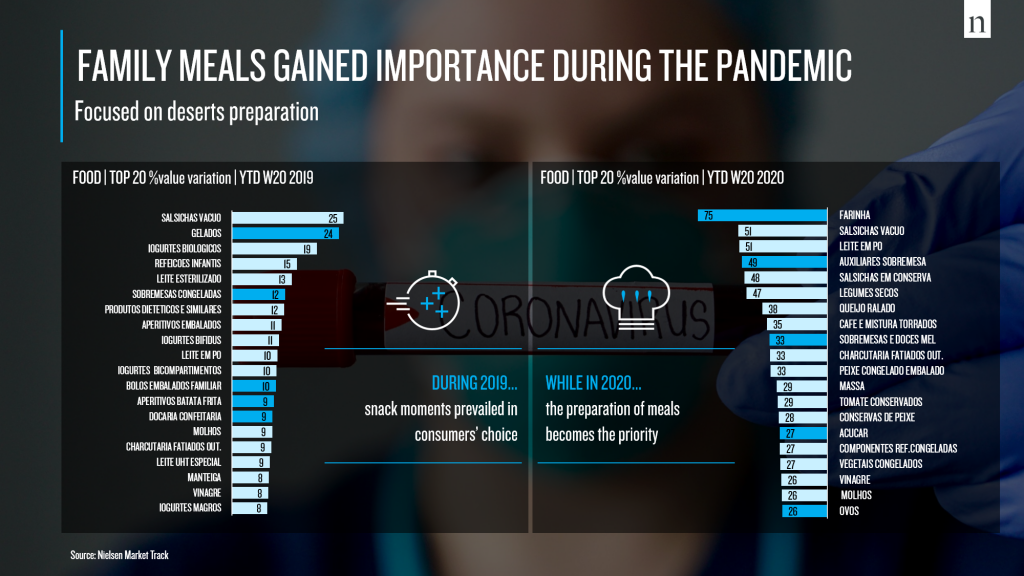
Comparing the Top 20 fastest-growing FMGC products in 2019 with the same Top this year, while in the past the emphasis was on snacks and the demand for convenience, we are now seeing a significant change and a gain in the importance of complementary products in the preparation of meals, the reinvention and new reach of mature categories - such as Flour and Sugar - and the conquest of share of pocket of food and drinks to consume at home.
Lifestyles readjusted to a new context
In this context of change and adaptation, consumers are seeking to rebalance their lifestyles, a reorientation that will force brands and retailers to look for new opportunities. Consumption at home has been driven by different needs, which consumers have sought to find in different types of products. An example of this balance is the relevance of the "price" factor for basic products and the benefits and experience associated with premium products, especially for socializing categories (usually consumed a lot outside the home), which have been highly impacted by consumption outside the home and now need to reinvent themselves, creating new moments of consumption now inside the home.
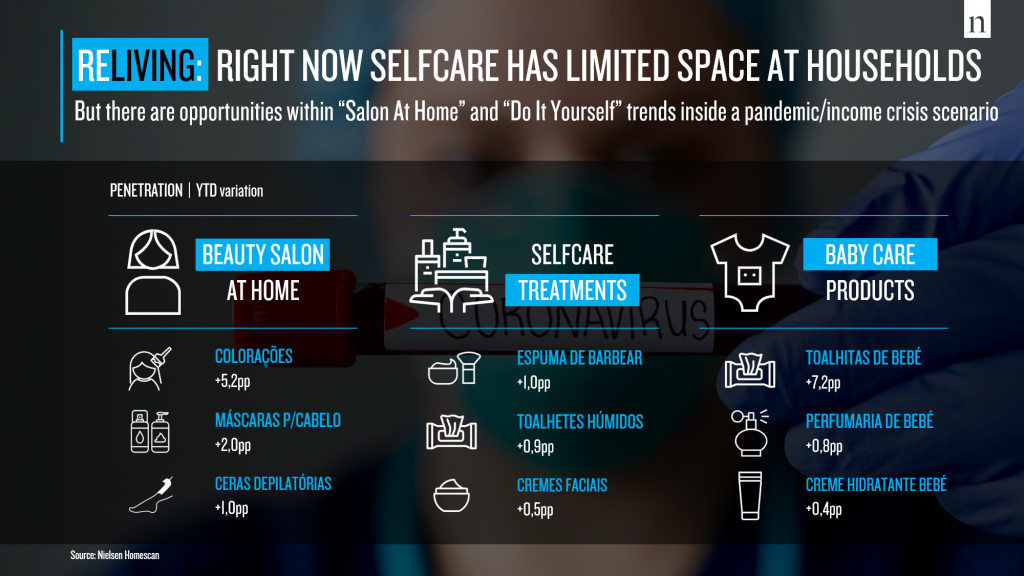
Another example of dynamics reinforced during this period of COVID-19 impact is the reality of personal care, which has lost ground at home. There are, however, opportunities for products that make it possible to carry out aesthetic procedures that would previously have taken place in hairdressers and barbershops and to respond to an increased demand for "Do It Yourself", either as a matter of cutting costs or because of the fear that still exists of going to commercial spaces.
As Lahna Barbosa, Senior Panel Consultant at Nielsen, points out, "consumer behavior is expected to change in the future and their response to the crisis may be greater or lesser depending on the impact on their income. But in general, we will find a consumer who is more concerned about readjusting their spending, basing their choices on new pricing mechanisms, a consumer who prioritizes and is guided by different values than in the past. All of this will have an impact on their choice of stores, brands and, of course, their shopping basket."
This demand for alternative consumption solutions is visible in the role of Cash & Carry, which has become an option during the pandemic, especially for larger families with the financial capacity to afford a higher purchase price. Shopping occasions in this channel increased by more than 500% and its penetration doubled compared to the previous year, according to the Nielsen Household Panel.
New values and openness to alternative solutions
Values have also changed based on this recent family experience. The ability to adapt and respond to new priorities will be part of the future, along with concerns about technology and health and well-being, but the response cannot be the same for all consumers.
The time is ripe for new opportunities made possible by the changes brought about by COVID-19. João Otávio, Client Development Manager at Nielsen, explains that "moments of consumption at home will gain importance, as will the demand for retailers with home delivery capacity - especially for organic and fresh products, which are increasingly on offer online in Portugal - and the possibility of communicating directly with consumers through digital channels. The issue of online is gaining relevance, with consumers becoming more digital and this channel gaining expression among a wider range of consumers. We can see the entry of the senior public into online shopping, with greater representation compared to last year, which leads us to believe that the age of the consumer may already represent less of a barrier to the growth of the channel in Portugal."
About Nielsen:
Nielsen Holdings plc (NYSE: NLSN) is a global data measurement and analysis company that provides the most complete and reliable insight into consumers and markets around the world. Nielsen is divided into two business units. Nielsen Global Media, the truth indicator for media markets, provides the media and advertising industries with unbiased and reliable metrics that create a shared understanding of the industry necessary for markets to function. Nielsen Global Connect provides consumer goods brands and retailers with accurate, actionable information and insights and a complete view of a complex and changing marketplace that companies need to innovate and grow.
Our approach combines original Nielsen data and other sources of information to help global clients understand what is happening now, what will happen in the future and how to act on this knowledge.
An S&P 500 company, Nielsen is present in more than 100 countries, covering more than 90% of the world's population. For more information, visit https://www.nielsen.com/pt/pt/.