
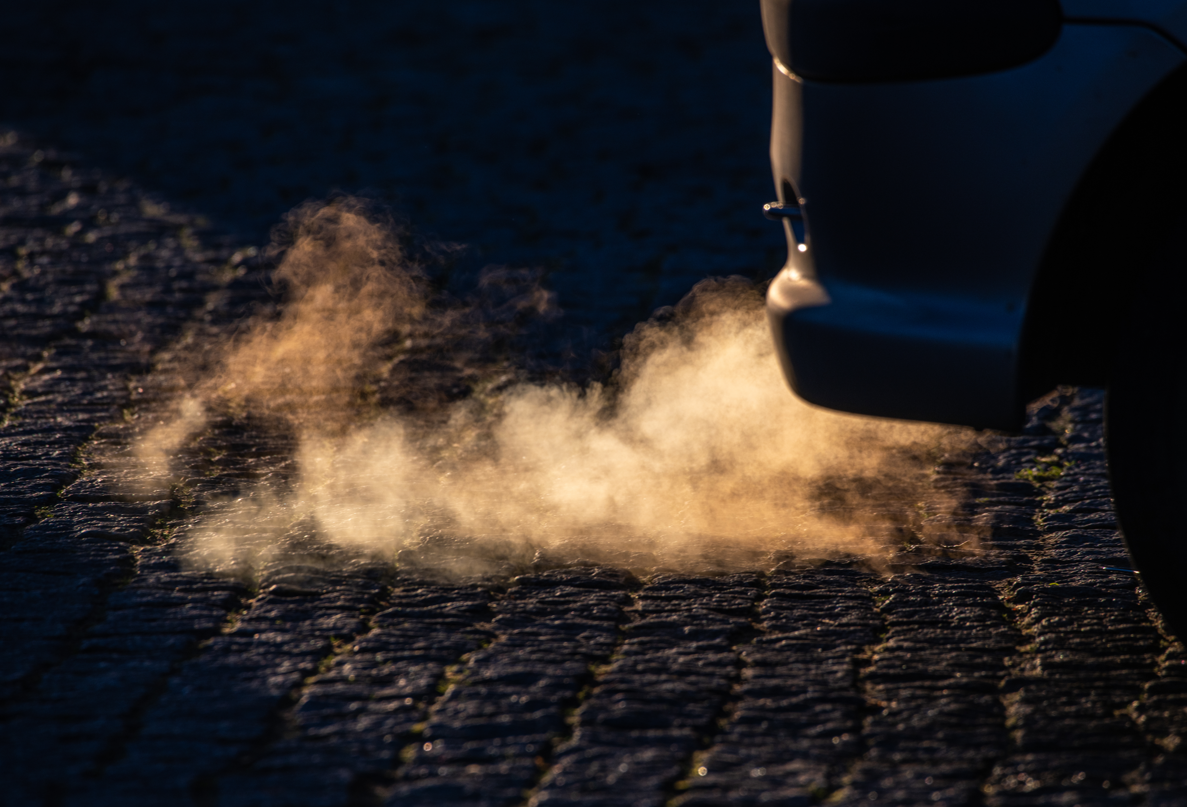
Different colors of exhaust smoke can indicate very costly malfunctions
Depending on the color of the exhaust smoke (white, blue, or black), repairs can cost up to 4,000 euros. Euromaster recommends that you stay alert and have a professional inspect your vehicle to prevent further damage. Different colors of exhaust smoke can mean much more than meets the eye.
Lisbon, June 19 – Should the smoke emitted from a car’s exhaust pipes have a specific color? If the vehicle is in good condition, the smoke is usually colorless, although on certain occasions you may see up to three different colors—white, blue, and black. Euromaster, a network of repair shops specializing in comprehensive vehicle maintenance, has identified the possible problems a car may have based on the color, density, and duration of the smoke.
White
White is one of the most common colors emitted by car exhausts. In most cases, if it is odorless, light in color, and short-lived (occurring as soon as the vehicle is started under certain weather conditions, such as in winter or fall, when there is a high percentage of moisture in the atmosphere), there is no cause for concern, as it is simply water vapor produced by condensation.
However, when the white smoke is thick and continues to come out of the exhaust while the vehicle is on the road, it may be a clear sign of a malfunction. One possible cause is water entering the combustion chamber, indicating some kind of problem with the engine or the head gasket. In this case, the problem is serious, and repairs can cost between 2,000 and 4,000 euros, depending on the make and model.
Blue
When the smoke coming from a car’s exhaust is blue, the main cause is burnt oil, which in turn is caused by an internal leak in the vehicle’s lubrication system. In this case, the problem can be very serious and costly; in the worst-case scenario, the vehicle could run out of oil—an undesirable event that would result in total engine failure.
On the other hand, this blue smoke may be caused by wear on the valves or gaskets, the cylinder liners, or the piston rings. In some cases, this color can also be a sign of a malfunctioning turbocharger. In these cases, oil consumption may also increase, so it is crucial to check the oil levels.
Black
When the smoke coming from the exhaust is black or dark gray, the possible causes vary depending on the vehicle’s fuel type. For example, in gasoline-powered cars, the cause may be excessive fuel combustion (or, in mechanics“ slang, a ”too rich” mixture), a problem that should be carefully checked.
The problem may be a fuel system issue caused by a malfunction in the fuel injectors. In this case, it is advisable to replace them, a repair that can cost around 1,000 euros.
In the case of diesel engines, this black smoke may simply be a buildup of soot in the particulate filter system; since the filter is undergoing regeneration, a longer drive at speeds between 2,500 rpm and 3,000 rpm would complete the regeneration cycle, and the smoke would disappear.
However, persistent black smoke from a diesel vehicle can also be caused by a variety of other factors, including potential problems with the fuel injectors, the electronics, the turbochargers, and even a malfunction in the particulate filter. In these cases, the repair cost varies depending on the severity and complexity of the problem, and the final bill could reach up to 3,000 euros.
“Knowing how to interpret the color and density of abnormal exhaust smoke from a vehicle is crucial for drivers, and if in doubt, they should take the car to a repair shop to have the problem diagnosed as soon as possible, thereby avoiding costly repairs.”, notes João Lúcio, head of product development at Euromaster.
About Euromaster
A Euromaster is the network of workshops specializing in comprehensive maintenance of vehicles throughout their useful life. Its more than 80 workshops in Portugal contribute to the road health of the vehicle fleet, both passenger cars and commercial vehicles, as well as new forms of mobility and fleets, providing a quality service and capillarity to adapt to your needs. Its services cover not only preventive maintenance, but also predictive maintenance through the analysis of data and critical points. Part of the Michelin Group, Euromaster is present in 19 European countries, with more than 2,500 workshops, 10,000 professionals and 1,600 mobile units. More information at www.euromaster.pt.